Buy used Class 7 Books online in India
Buy Second Hand Books, Used Books Online In India
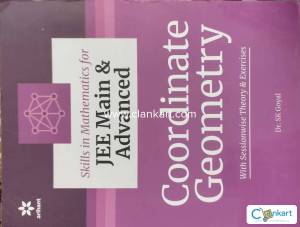
Arihant Coordinate Geometry
1. ‘Skill in Mathematics’ series is prepared for JEE Main and Advanced papers 2. It is a highly recommended textbook to develop a strong grounding in Coordinate Geometry 3. The book covers the entire syllabus into 7 chapters 4. Each chapter includes a wide range of questions that are asked in the examinations Good foundational grip is required in the Coordinate Geometry, while you are preparing for JEE Mains & Advanced or any other engineering. Bringing up the series “Skills in Mathematics for JEE Main & Advanced for Coordinate Geometry” that is carefully revised with the sessionwise theory and exercise; to help candidates to learn & tackle the mathematical problems. The book has 7 Chapters covering the whole syllabus for the JEE Mains and Advanced as prescribed. Each chapter is divided into sessions giving complete clarity to concepts. Apart from sessionwise theory, JEE Type examples and Chapter Exercise contain huge amount of questions that are provided in every chapter under Practice Part. Prepared under great expertise, it is a highly recommended textbook to develop a strong grounding in Algebra to perform best in JEE and various engineering entrances. TOC: Coordinate Systems and Coordinates, The Straight Lines, Pair of Straight Lines, Circle, Parabola, Ellipse, Hyperbola.
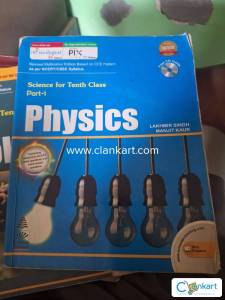
Class 10 physics question bank
Description: A series of six books for Classes IX and X according to the CBSE syllabus and CCE Pattern. Salient Features: 1.Very short answer type questions (including true-false type questions and fill in the blanks type questions). 2.Short answer type questions. 3. Long answer type questions (or Essay type questions). 4. Multiple choice questions (MCQs) based on theory. 5. Questions based on high order thinking skills (HOTS). 6. Multiple choice questions (MCQs) based on practical skills in science.. 7. NCERT book questions and exercises (with answers). 8. Value based questions (with answers).
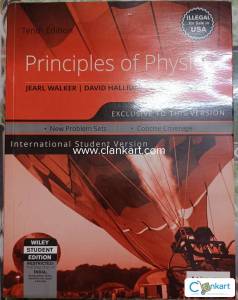
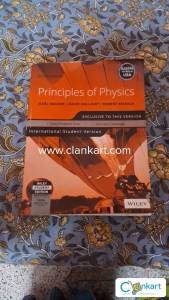
Principles of Physics 10th edition
The 10th edition of halliday's fundamentals of physics builds upon previous issues by offering several new features and additions. The book provides a very robust collection of high-quality problem sets, offering immediate and meaningful feedback to students, along with varying levels of question assistance. In addition to offering the end-of-chapter problem sets, table of contents: chapter 1: measurement chapter 2: motion along a straight line chapter 3: vector chapter 4: motion in two and three dimensions chapter 5: force and motion i chapter 6: force and motion ii chapter 7: kinetic energy and work chapter 8: potential energy and conservation of energy chapter 9: center of mass and linear momentum chapter 10: rotation chapter 11: rolling, torque and angular momentum chapter 12: equilibrium and elasticity chapter 13: gravitation chapter 14: fluids chapter 15: oscillations chapter 16: waves i chapter 17: waves ii chapter 18: temperature, heat and the first law of thermodynamics chapter 19: the kinetic theory of gases chapter 20: entropy and the second law of thermodynamics chapter 21: electric charge chapter 22: electric fields chapter 23: gauss' law chapter 24: electric potential chapter 25: capacitance chapter 26: current and resistance chapter 27: circuits chapter 28: magnetic fields chapter 29: magnetic fields due to currents chapter 30: induction and inductance chapter 31: electromagnetic oscillations and alternating current chapter 32: maxwell's equations; magnetism of matter chapter 33: electromagnetic waves chapter 34: images chapter 35: interference chapter 36: diffraction chapter 37: relativity chapter 38: photons and matter waves chapter 39: more about matter waves chapter 40: all about atoms chapter 41: conduction of electricity in solids chapter 42: nuclear physics chapter 43: energy from the nucleus chapter 44: quarks, leptons and the big bang
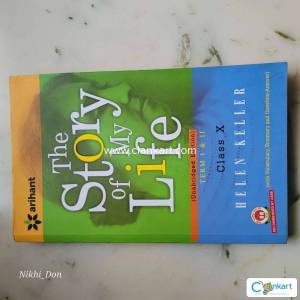
NCERT class 10 Helen Keller
Fictionalized but factual biography of Keller, for young (age 10) readers. #45 in the Grosset & Dunlap Signature Books series.Helen Keller would not be bound by conditions. Rendered deaf and blind at 19 months by scarlet fever, she learned to read (in several languages) and even speak, eventually graduating with honors from Radcliffe College in 1904, where as a student she wrote The Story of My Life. That she accomplished all of this in an age when few women attended college and the disabled were often relegated to the background, spoken of only in hushed tones, is remarkable. But Keller's many other achievements are impressive by any standard: she authored 13 books, wrote countless articles, and devoted her life to social reform. An active and effective suffragist, pacifist, and socialist (the latter association earned her an FBI file), she lectured on behalf of disabled people everywhere. She also helped start several foundations that continue to improve the lives of the deaf and blind around the world.As a young girl Keller was obstinate, prone to fits of violence, and seething with rage at her inability to express herself. But at the age of 7 this wild child was transformed when, at the urging of Alexander Graham Bell, Anne Sullivan became her teacher, an event she declares "the most important day I remember in all my life." (Sullivan herself had once been blind, but partially recovered her sight after a series of operations.) In a memorable passage, Keller writes of the day "Teacher" led her to a stream and repeatedly spelled out the letters w-a-t-e-r on one of her hands while pouring water over the other. This method proved a revelation: "That living world awakened my soul, gave it light, hope, joy, set it free! There were barriers still, it is true, but barriers that could in time be swept away." And, indeed, most of them were. In her lovingly crafted and deeply perceptive autobiography, Keller's joyous spirit is most vividly expressed in her connection to nature:Indeed, everything that could hum, or b
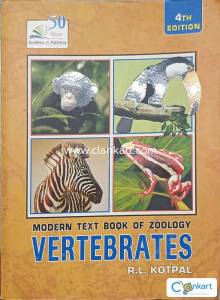
Modern Textbook Of Zoology Vertebrates
1. Phylum Chordata: An Introduction PROTOCHORDATES2. Type 1. Balanoglossus: A Tongue Worm3. Subphylum I. Hemichardata4. Type 2. Herdmania: A Sea-Squirt5. Subphylum II. Urochordata6. Type 3. Branchiostoma (= Amphioxus): The Laneelet7. Subphylum III. Cephalochordata 8. Protochordata: General and Comparative SECTION IILOWER VERTEB ES9. Subphylum IV. Vertebrata10. Class 1. Ostracodermi (Extinct) 11. Type 4. Petromyzon: The Lamprey12. Class 2. Cyclostomata13. Class 3. Placodermi (Extinct)14. Type 5. Scoliodon: The Dogfish: A Cartilaginous Fish15. Class 4. Chondrichthyes: The Cartilaginous Fishes 16. Typ e 6. Labeo rohita: Rohu: A Bony Fish 17. Class 5. osteichthyes: The Bony Fishes 18. Superclass Pisces and Fish General19.Type 7.Rana Tigrina: Common Indian Bull Frog Now Called as Hoplobatrachus tigrinus20. Class 6. Amphibia21. Amphibia: General Account SECTION IIIHIGHER VERTEBRATES22. Type 8. Uromastix hardwickii: The Spiny Tailed Lizard23. Type 9. Calotes versicolor: The Garden Lizard 24. Snakes: General Account 25. Class 7. Reptilia26. Reptilia: General Account27. Type 10. Calumba livia: The Common Rock Pigeon28. Class 8. Aves: The Birds 29. Aves: General Account30. Type 1 1. Oryctolagus: The Rabbit 31. Class 9. Mammalia32, Subclass Prototheria (Order Monotremata) 33. Infraclass Metatheria (Order Marsupialia)34. Mammalia: General AccountSECTION IVVERTEBRATE OSTEOLOGY35. Endoskeleton of Scoliodon 36. Endoskeleton of Labeo rohita37. Endoskeleton of Frog38. Endoskeleton of Varanus39. Endoskeleton of Fowl40. Endoskeleton of Rabbit 41. Introduction of Vertebrate Embryology42. Development of Balanoglossus 43. Development of Herdmania 44. Development of Branchiostoma 45. Development of Frog46. Development of Chick (Fowl) 47. Development of Rabbit 48. Placentation in MammalsSECTION VIMISCELLANY49. Organ Histology of Frog and Rabbit 50. Wild Life of India SECTION VIIICOMPARATIVE ANATOMY OFVERTEBRATES51. Integument and its Derivatives in Vertebrates52. Endoskeleton in Vertebrates53. Digestive System in Vertebrates 54. Respira
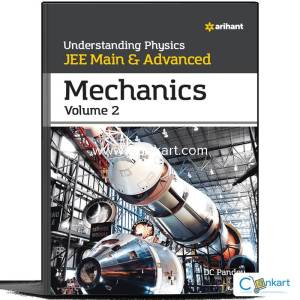
UNDERSTAND PHYSICS JEE MAINS &ADVANCED Mechanics Vol. 2
1. Understanding Physics Series Comprises of Total 5 Books 2. Total 36 Waves and Thermodynamics of Physics 3. Volume 4 is Electricity and Magnetism Consists 6 Chapters 4. Includes Last 6 Years Question of JEE Main & Advances 5. One of the Most Preferred Textbook for IIT JEE 6. Focused Study Material with Applications Solving Skills 7. Includes New Pattern of Question from recent previous Exams IIT JEE has become a worldwide brand in the engineering institutions that has some of the best and brightest engineering students and career professionals. To make their way in this institution, every year lakhs of aspirants appear for IIT JEE Main and Advanced held by CBSE which tests the conceptual knowledge real-life application based problems on Physics, Chemistry, and Mathematics. Arihant’s Understanding Physics is one of the best selling series of books in Physics, since its first edition for the preparation of JEE Entrance. The fourth volume of this series deals with Waves and Thermodynamics providing the in-depth discussions on the Wave Motion, Thermometry, Thermal Expansion & Kinetic Theory, Calorimetry and Heat Transfer. Dividing the entire syllabus into 6 scoring Chapters, this book focuses on the concept building along with solidifying the problem-solving skills. It is a must have book for anyone who are desiring to be firm footed in the concepts of physics as well as their applications in problem solving. TOC Wave Motion, Superposition of Waves, Sound Waves, Thermometry, Thermal Expansion & Kinetic Theory, Laws of Thermodynamics, Calorimetry and Heat Transfer, Hints & Solutions.
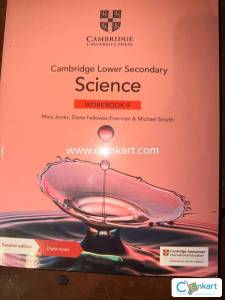
Cambridge Lower Secondary Science Workbook 9 (2nd Edition)
Written by well-respected authors, the Cambridge Checkpoint Science suite provides a comprehensive, structured resource which covers the full Cambridge Secondary 1 framework and seamlessly progresses into the next stage. This engaging course supports teaching of the Science framework both theoretically and practically, with full coverage of the Scientific Enquiry framework integrated throughout the series. This Workbook for Stage 9 contains exercises that develop students' ability to apply their knowledge, as well as Scientific Enquiry skills relating to planning experiments and recording results. Integrated review of topics from Stages 7 and 8 as well as full coverage of the Stage 9 content provides preparation for the Cambridge Checkpoint Science test and a solid foundation for progression into the Cambridge IGCSE Sciences.
Kaplan Medical Preclinical USMLE Step 1 Review Books
I personally have used them and it has helped me pass my exam, wishing you the best too! They are annotated with must know points from the live lectures of Dr. Turco, Dr. Harris, etc. and will definitely help you clear your exam!! All the 7 subjects with 7 bookmarks will be available as 1 stock! These will be very useful for all USMLE Step 1, 2 and 3! It is at a very competitive price compared to what's on the market.
Pearson IIT foundation class 9 Chemistry
Pearson Foundation Series, Biology, is a much awaited addition to the existing Foundation Series and is particularly designed for aspirants of medical entrance examinations. Each title provides authentic and class-tested content for effective preparation and competitive readiness. C conceptual clarity and gaining mastery over the art of critical thinking are the central theme s and to ensure this, the series has lucid content along with neatly-sketched diagrams, illustrations, concept-maps and real-life images. These books are an indispensable companion for all aspirants aiming to succeed in key entrance examinations, like the National Eligibility cum Entrance Test (NEET), Olympiads, Kishore Vaigyanik Protsahan Yojana (KVPY), etc. The series covers classes 7 to 10.
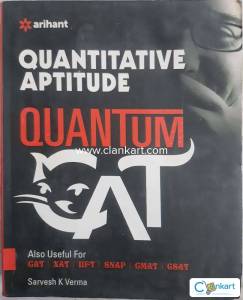
Quantum CAT
1. ‘Quantum Cat’- the bestselling study guide for Management entrances 2. The entire syllabus has been divided into 21 Chapters 3. Every chapter is accompanied with CAT Test for quick revision of concepts 4. More than 400 Fundamental Concepts are provided for better understanding 5. More than 1000 Examples are provided with Use-Cases, Twists, Tricks Choices and Lateral Solutions 6. More than 5000 hand crafted problem are given for the practice 7. 2000 New MCQs have been provided for thorough practice Quantitative Aptitude is a core component for getting a winning CAT Score. Out of every section, Quantitative Ability is one of the most unpredictable and time consuming section. Quantitative Aptitude stems an important part of an individuals’ analytical and logical ability for solving complex problems, making it a filtering tool for qualifying CAT and other Management Entrances. The current edition of “Quantum Cat” has been designed by keeping in mind the needs of those who wish to enhance Quantitative Aptitude for CAT and other Management Examinations. The entire syllabus of Quantitative Aptitude section is divided into 21 Chapters and every topic has 2-3 levels of questions that help students to get prepared for the most difficult problems even beyond the CAT Level. At the end of every chapter there is ‘CAT Test’ that contains problems related to the topic that helps in the quick revision of the concepts. This edition has more than 400 Fundamental Concepts to remember, more than 1000 examples are used to give the conceptual clarity with the methods and tricks are used to solve the questions. With the solution oriented approach this book provides more than 5000 hand crafted problems with their respective solution. It also includes more than 2000 MCQs for thorough practice. This book provides the alternative and smarter solutions to get correct answers in lesser time to crack CAT. This book is highly useful for not only for management entrances but for other competitive examinations. With so many features this book
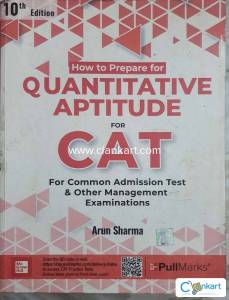
Quantitative Aptitude by arun sharma
1. ‘Quantum Cat’- the bestselling study guide for Management entrances 2. The entire syllabus has been divided into 21 Chapters 3. Every chapter is accompanied with CAT Test for quick revision of concepts 4. More than 400 Fundamental Concepts are provided for better understanding 5. More than 1000 Examples are provided with Use-Cases, Twists, Tricks Choices and Lateral Solutions 6. More than 5000 hand crafted problem are given for the practice 7. 2000 New MCQs have been provided for thorough practice Quantitative Aptitude is a core component for getting a winning CAT Score. Out of every section, Quantitative Ability is one of the most unpredictable and time consuming section. Quantitative Aptitude stems an important part of an individuals’ analytical and logical ability for solving complex problems, making it a filtering tool for qualifying CAT and other Management Entrances. The current edition of “Quantum Cat” has been designed by keeping in mind the needs of those who wish to enhance Quantitative Aptitude for CAT and other Management Examinations. The entire syllabus of Quantitative Aptitude section is divided into 21 Chapters and every topic has 2-3 levels of questions that help students to get prepared for the most difficult problems even beyond the CAT Level. At the end of every chapter there is ‘CAT Test’ that contains problems related to the topic that helps in the quick revision of the concepts. This edition has more than 400 Fundamental Concepts to remember, more than 1000 examples are used to give the conceptual clarity with the methods and tricks are used to solve the questions. With the solution oriented approach this book provides more than 5000 hand crafted problems with their respective solution. It also includes more than 2000 MCQs for thorough practice. This book provides the alternative and smarter solutions to get correct answers in lesser time to crack CAT. This book is highly useful for not only for management entrances but for other competitive examinations. With so many features this book
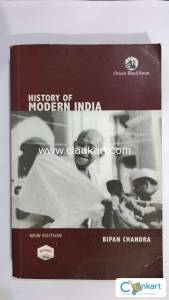
History of Modern India
The SAGE Series in Modern Indian History consists of well-researched volumes with a wider scope and is intended to bring together the growing volume of historical studies that share a broad common historiographic focus. The approach that the authors have tried to evolve looks sympathetically, though critically, at the Indian national liberation struggle and other popular movements such as those of labour, peasants, lower castes, tribal peoples and women. The series also looks at colonialism as a structure and a system, and analyzes changes in economy, society and culture in the colonial context as also in the context of independent India. It focuses on communalism and casteism as major features of modern Indian development. The volumes in the series will tend to reflect this approach as also its changing and developing features. At the broadest plane this approach is committed to the Enlightenment values of rationalism, humanism, democracy and secularism. This set includes: Volume 1: Independence and Partition: The Erosion of Colonial Power in India by Sucheta Mahajan Volume 2: A Narrative of Communal Politics: Uttar Pradesh, 1937–39 by Salil Misra Volume 3: Imperialism, Nationalism and the Making of the Indian Capitalist Class, 1920–1947 by Aditya Mukherjee Volume 4: From Movement to Government: The Congress in the United Provinces, 1937–42 by Visalakshi Menon Volume 5: Peasants in India’s Non-Violent Revolution: Practice and Theory by Mridula Mukherjee Volume 6: Communalism in Bengal: From Famine to Noakhali, 1943–47 by Rakesh Batabyal Volume 7: Political Mobilization and Identity in Western India, 1934–47 by Shri Krishan Volume 8: The Garrison State: Military, Government and Society in Colonial Punjab, 1849–1947 by Tan Tai Yong Volume 9: Colonializing Agriculture: The Myth of Punjab Exceptionalism by Mridula Mukherjee Volume 10: Region, Nation, “Heartland”: Uttar Pradesh in India’s Body-Politic by Gyanesh Kudaisya Volume 11: National Movement and Politics in Orissa, 1920–29 by Pritish Acharya Volume 12: Commun
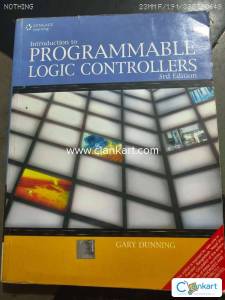
Introduction to programmable logic controllers for engineering
Updated to reflect recent industry developments, this edition features practical information on Rockwell Automation?s SLC 500 family of PLCs and includes a no-nonsense introduction to RSLogix software and the new ControlLogix PLC. To assist readers in understanding key concepts, the art program has been modernized to include improved illustrations, current manufacturer-specific photos, and actual RSLogix software screens to visibly illustrate essential principles of PLC operation. New material has been added on ControlNet and DeviceNet, and a new chapter on program flow instructions includes updated references to the SLC 500, MicroLogix, and the PLC 5. Features: * Coverage examines how Rockwell Automation?s SLC 500 and MicroLogix PLCs work and program, leading to a better understanding of fundamental processes * A clear-cut orientation to general principles underlying all PLC operations enhances readers? ability to assimilate more advanced concepts and instruction sets in later chapters * New exercises in the Lab Manual complement the new program flow instructions and take readers through jump to subroutine, jump to label, MCR, and the immediate input instruction About The Author: Gary Dunning, Hennepin Technical College Table Of Contents: 1. Welcome to the World of Programmable Logic Controllers 2. Micro Programmable Logic Controllers 3. Programming a Programmable Controller 4. Number Systems 5. Introduction to PLC Operation 6. Introduction to Logic 7. Input Modules 8. Output Modules 9. Putting Together a Modular PLC 10. PLC Processors 11. Introduction to ControlNet and DeviceNet
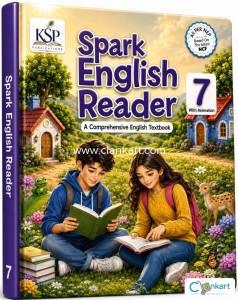
Spark English Reader Class 7
Spark English Reader Class 7 is a thoughtfully developed English language textbook designed to strengthen learners language proficiency and communication skills. The book includes a rich collection of stories, poems, essays, dialogues, and informative texts that enhance reading comprehension, vocabulary, grammar, and writing abilities. Through engaging exercises and activity-based learning, students are encouraged to think critically, express their ideas effectively, and develop confidence in spoken and written English. The content is aligned with modern educational needs and promotes creativity, analytical thinking, and value-based learning.