Buy used Business & Economics online in India
Buy Second Hand Books, Used Books Online In India

Zero to One
Peter Thiel is the co-founder of PayPal and the first outside investor in Facebook. In the Spring of 2012, he gave a lecture course at Stanford for software engineers, calling on them to think boldly and broadly about how they might use their skills to shape the future, and imparting the lessons he has gleaned from his own experience. One of the students in that class - Blake Masters - took notes and posted them online. The blog posts became a huge success, with hundreds of thousands of hits, and became the basis for Zero to One.We live in an age of technological stagnation, even if we're too distracted by our new mobile devices to notice. Progress has stalled in every industry except computers, and globalization is hardly the revolution people think it is. It's true that the world can get marginally richer by building new copies of old inventions, making horizontal progress from '1 to n'. But true innovators have nothing to copy. The most valuable companies of the future will make vertical progress from '0 to 1', creating entirely new industries and products that have never existed before. Zero to One is about how to build these companies.A business book that also provides insight into the world of start-ups from a Silicon Valley icon, Thiel shows how to pursue your goals using the most important, most difficult, and most underrated skill in every job or industry: thinking for yourself.
Deep Work Book
Deep work is the ability to focus without distraction on a cognitively demanding task. It's a skill that allows you to quickly master complicated information and produce better results in less time. Deep Work will make you better at what you do and provide the sense of true fulfillment that comes from craftsmanship. In short, deep work is like a super power in our increasingly competitive twenty-first century economy. And yet, most people have lost the ability to go deep-spending their days instead in a frantic blur of e-mail and social media, not even realizing there's a better way.In Deep Work, author and professor Cal Newport flips the narrative on impact in a connected age. Instead of arguing distraction is bad, he instead celebrates the power of its opposite. Dividing this book into two parts, he first makes the case that in almost any profession, cultivating a deep work ethic will produce massive benefits. He then presents a rigorous training regimen, presented as a series of four "rules," for transforming your mind and habits to support this skill.1. Work Deeply2. Embrace Boredom3. Quit Social Media4. Drain the ShallowsA mix of cultural criticism and actionable advice, Deep Work takes the reader on a journey through memorable stories-from Carl Jung building a stone tower in the woods to focus his mind, to a social media pioneer buying a round-trip business class ticket to Tokyo to write a book free from distraction in the air-and no-nonsense advice, such as the claim that most serious professionals should quit social media and that you should practice being bored. Deep Work is an indispensable guide to anyone seeking focused success in a distracted world.
The 48 Laws of Power
Amoral, cunning, ruthless, and instructive, this piercing work distills three thousand years of the history of power in to forty-eight well explicated laws. As attention-grabbing in its design as it is in its content, this bold volume outlines the laws of power in their unvarnished essence, synthesizing the philosophies of Machiavelli, Sun-tzu, Carl von Clausewitz, and other great thinkers. Some laws teach the need for prudence ("Law 1: Never Outshine the Master"), the virtue of stealth ("Law 3: Conceal Your Intentions"), and many demand the total absence of mercy ("Law 15: Crush Your Enemy Totally"), but like it or not, all have applications in real life. Illustrated through the tactics of Queen Elizabeth I, Henry Kissinger, P. T. Barnum, and other famous figures who have wielded--or been victimized by--power, these laws will fascinate any reader interested in gaining, observing, or defending against ultimate control.
Political History
The Arthashastra is an ancient Indian treatise on statecraft, economic policy and military strategy, written in Sanskrit. It identifies its author by the names 'Kauṭilya' and 'Vishnugupta', both names that are traditionally identified with Chanakya (c. 350–283 BC), who was a scholar at Takshashila and the teacher and guardian of Emperor Chandragupta Maurya, founder of the Mauryan Empire. The text was influential until the 12th century, when it disappeared. It was rediscovered in 1904 by R. Shamasastry, who published it in 1909. The first English translation was published in 1915.Roger Boesche describes the Arthaśāstra as "a book of political realism, a book analysing how the political world does work and not very often stating how it ought to work, a book that frequently discloses to a king what calculating and sometimes brutal measures he must carry out to preserve the state and the common good."Centrally, Arthaśāstra argues how in an autocracy an efficient and solid economy can be managed. It discusses the ethics of economics and the duties and obligations of a king. The scope of Arthaśāstra is, however, far wider than statecraft, and it offers an outline of the entire legal and bureaucratic framework for administering a kingdom, with a wealth of descriptive cultural detail on topics such as mineralogy, mining and metals, agriculture, animal husbandry, medicine and the use of wildlife. The Arthaśāstra also focuses on issues of welfare (for instance, redistribution of wealth during a famine) and the collective ethics that hold a society together.
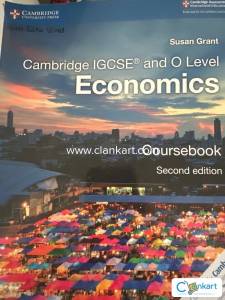
IGCSE and O level Economics Coursebook Second edition
Covers the Cambridge IGCSE syllabus (0455) and the Cambridge O Level syllabus (2281), first examination from 2020. This series helps students understand economic theory, terminology and principles. It matches the Cambridge IGCSE and O Level Economics syllabuses. The coursebook helps students apply tools of economic analysis, make judgements on economic issues, use basic economic numeracy and literacy, and take greater part in decision-making processes in everyday life. Sample questions provide opportunities for students to develop their evaluative skills. It provides a foundation for advanced study in Economics such as A Level. Answers to the coursebook and workbook questions are in the teacher's resource.
Entrepreneurship Development
The revised and updated Third edition of Entrepreneurship Development and Small Business Enterprises discusses how entrepreneurs can successfully manage their ventures in a highly dynamic and challenging environment. This book prepares students for life o
Pearson MBA Books Retail Management
Quantitative Analysis for Management, 12e, is a textbook aimed at helping undergraduate and graduate students develop an in-depth understanding of business analytics, quantitative methods, and management science. To enable students connect how the techniques presented in this book apply in the real world, computer-based applications and examples are a major focus of this edition. Mathematical models, with all the necessary assumptions, are presented in a clear and jargon-free language. The solution procedures are then applied to example problems alongside step-by-step how-to" instructions."
McGraw Hill MBA Books Strategic Management
The science behind the traits and quirks that drive creative geniuses to make spectacular breakthroughs What really distinguishes the people who literally change the world -- those creative geniuses who give us one breakthrough after another? What differentiates Marie Curie or Elon Musk from the merely creative, the many one-hit wonders among us? Melissa Schilling, one of the world's leading experts on innovation, invites us into the lives of eight people -- Albert Einstein, Benjamin Franklin, Elon Musk, Dean Kamen, Nikola Tesla, Marie Curie, Thomas Edison, and Steve Jobs -- to identify the traits and experiences that drove them to make spectacular breakthroughs, over and over again. While all innovators possess incredible intellect, intellect alone, she shows, does not create a breakthrough innovator. It was their personal, social, and emotional quirkiness that enabled true genius to break through--not just once but again and again. Nearly all of the innovators, for example, exhibited high levels of social detachment that enabled them to break with norms, an almost maniacal faith in their ability to overcome obstacles, and a passionate idealism that pushed them to work with intensity even in the face of criticism or failure. While these individual traits would be unlikely to work in isolation -- being unconventional without having high levels of confidence, effort, and goal directedness might, for example, result in rebellious behavior that does not lead to meaningful outcomes -- together they can fuel both the ability and drive to pursue what others deem impossible. Schilling shares the science behind the convergence of traits that increases the likelihood of success. And, as Schilling also reveals, there is much to learn about nurturing breakthrough innovation in our own lives -- in, for example, the way we run organizations, manage people, and even how we raise our children.
MBA Books Brand Management
The fourth edition of Strategic Brand Management offers a comprehensive view of the changing technological, cultural, global and economic environment that brands face. The book is well-grounded in practice and can be easily related to past and current marketing activities, events and case studies. Science of Branding boxes have been included to provide in-depth treatment of cutting-edge ideas and concepts. Each chapter contains a Brand Focus appendix that delves into detail on specific and related branding topics, such as brand audits, legal issues, brand crises and private labels. Numerous in-text examples, highlighting brands such as Dettol, Colgate and Jet Airways, have been introduced to illuminate the discussion of virtually every topic and a series of Branding Brief boxes provide more in-depth examinations of ed topics or brands. The text includes engaging visuals that highlight many of the important and interesting concepts and examples from the chapters. Print ads from various Indian companies, such as TCS, ITC, Taj Hotels and Marico, have been incorporated to illustrate case studies and examples. Some of the specific new topics reviewed in depth in this edition include:* Marketing in a recession*Brand communities*Luxury branding*Brand characters*Brand personas*Brand makeovers*Shopper marketing*Person branding*Social currency*Brand potential*Brand extension scorecard*Culture and branding*Brand flashbacks*Future brand priorities
MBA Textbook Sales and Distribution
"The Primary aim of the book is to provide students of management with a firm foundation for understanding all the main components of sales and distribution management. The book has a practical orientation, as it is written by authors who have worked as practicing managers mostly in sales and distribution and between them have over 60 yrs of industry experience. The book, therefore, is a useful resource to practicing professionals in industry, training and consultancy. New to this edition ? Coverage of all the topics that a sales/distribution manager needs to know in order to carry out his/her job effectively. ? Focus on the decision-making process and implementation of decisions in sales and distribution management. ? A new chapter on Sales Promotion has been added to reflect the increasing interest in sales promotion shown by industry professionals and academic fraternity. ? Important topics have been introduced and expanded like e-Selling, Marketing Intelligence, Retailing, Managing Key Accounts, Marketing Logistics and SCM, Channel Systems and their Management, and so on."
Economics McGraw Hill
Economics,17e,by Samuelson and Nordhaus,is the classic text which set the standard for principles of economics texts when it was introduced in 1948. This text has been the standard-bearer in principles books for over 50 years,presenting a clear,accurate,and interesting indroduction to economics. Bill Nordhaus is now the primary author of this modern treatment of economics which has been thoroughly updated.
TWELVE AND A HALF by Gary Vaynerchuk
USA Today BestsellerIn his sixth business book, bestselling author, entrepreneur, and investor Gary Vaynerchuk explores the twelve essential emotional skills that are integral to his life—and business—success and provides today’s (and tomorrow’s) leaders with critical tools to acquire and develop these traits.For decades, leaders have relied on “hard” skills to make smart decisions, while dismissing the importance of emotional intelligence. Soft skills like self-awareness and curiosity aren’t quantifiable; they can’t be measured on a spreadsheet and aren’t taught in B-schools or emphasized in institutions. We’ve been taught that emotional intelligence is a “nice to have” in business, not a requirement. But soft skills can actually accelerate business success, Gary Vaynerchuk argues. For analytical minds, it’s challenging to understand how to get “better” at being self-aware, curious, or empathetic—or even why it’s important to try. In this wise and practical book, Gary explores the 12 human ingredients that have led to his success and happiness and provides exercises to help you develop these traits yourself. He also shares what the “half” is—that emotional ingredient of leadership he’s weakest at and makes the most effort to improve. Working through the ideas and exercises in the book, he teaches you how to discover your own “halves” and offers insight on how to strengthen them. Gary’s secret to success is using these twelve traits in varying mixtures, depending on the situation. But how do we know when to balance patience with ambition Humility with conviction Gary provides real-life examples involving common business scenarios to show you how to use them together for optimum results. This iconoclastic book will help you refine your ingredients and improve your leadership capabilities. When implemented in the proper situation, these ingredients can help leaders land promotions, retain core employees, move faster than competitors, win the loyalty of customers, and build successful organizations that last.