Clankart Logo

Buy used Business & Economics online in India

Buy Second Hand Books, Used Books Online In India

How to Make Money Trading with Candlestick Charts

How to Make Money Trading with Candlestick Charts

₹269 ₹495
46% off

Japanese rice traders have successfully used candle signals to amass huge fortunes for nearly four centuries. Constantly refined and tested over time, candlestick signals are now being used the world over for trading all financial markets, including stocks, derivatives and currencies, etc. This book explains step-by-step how you can make money by trading the powerful and proven candlestick techniques. Here is how: ● Explanation of major candle signals; how to recognize them and use them effectively ● The underlying market psychology revealed by each candle formation ● How to combine candlestick signals with Western technical analysis to take advantage of high probability trades which generate explosive profits ● Stop loss settings for various candlestick signals for cutting losses. Master this and you will be way ahead of fellow traders ● How the use of candlesticks with technical analysis provides a simple mechanical trading system which eliminates emotional interference, panic and greed ● How to use candlestick charts for making money from longer term trading and investing ● PLUS: Proven, market-tested trading ideas tips and common mistakes to avoid based on the author's rich experience of trading stocks and options. This book will enable both new traders and experienced traders derive systematic and consistent profits from the market by adding candlestick charting to their trading arsenal. REVIEWS FOR THE BOOK "Educative addition to the technical trader's shelf." — The Hindu Business Line "Clearly explains and reinforces the message of each candlestick pattern, pointing out other details that can help determine success or failure at each occurrence. The real life examples are manifold, well chosen and amplify the lessons being taught. Highly recommended reading for traders in all markets to discover ways of profiting from candlestick trading." — Alan Northcott "Sadekar's book not only manages to live upto the expectations but probably excels them. Sadekar attempts to keep things simple, and targets the beginne

2 years ago
Advertisement
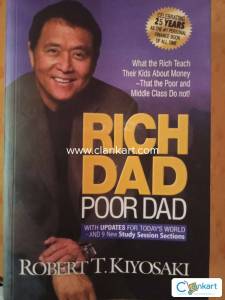
Rich dad poor dad

Rich dad poor dad

₹150

April 2017 marks 20 years since Robert Kiyosaki’s Rich Dad Poor Dad first made waves in the Personal Finance arena.It has since become the #1 Personal Finance book of all time... translated into dozens of languages and sold around the world.Rich Dad Poor Dad is Robert's story of growing up with two dads — his real father and the father of his best friend, his rich dad — and the ways in which both men shaped his thoughts about money and investing. The book explodes the myth that you need to earn a high income to be rich and explains the difference between working for money and having your money work for you.20 Years... 20/20 HindsightIn the 20th Anniversary Edition of this classic, Robert offers an update on what we’ve seen over the past 20 years related to money, investing, and the global economy. Sidebars throughout the book will take readers “fast forward” — from 1997 to today — as Robert assesses how the principles taught by his rich dad have stood the test of time.In many ways, the messages of Rich Dad Poor Dad, messages that were criticized and challenged two decades ago, are more meaningful, relevant and important today than they were 20 years ago.As always, readers can expect that Robert will be candid, insightful... and continue to rock more than a few boats in his retrospective.Will there be a few surprises? Count on it.Rich Dad Poor Dad...• Explodes the myth that you need to earn a high income to become rich• Challenges the belief that your house is an asset• Shows parents why they can't rely on the school system to teach their kids about money• Defines once and for all an asset and a liability• Teaches you what to teach your kids about money for their future financial success

2 years ago
Want to see your books here? Have Used Books?
Make some extra cash by selling your old books for actual money in your UPI/Bank account. Go on, it's quick and easy.

Sbpd Economics class 12

Sbpd Economics class 12

₹215

Part A : Introductory Micro Economics 1.Micro Economics : An Introduction, 2. Central Problems of an Economy, 3. Consumer’s Equilibrium, 4. Demand and Law of Demand, 5. Price Elasticity of Demand, 6. Production Function : Returns to a Factor and Returns to Scale, 7. Production Costs, 8. Concepts of Revenue, 9. Producer’s Equilibrium : Meaning and Conditions, 10. Supply and Law of Supply, 11. Elasticity of Supply, 12. Different Forms of Market : Meaning and Features, 13. Market Equilibrium Under Perfect Competition and Effects of Shifts in Demand & Supply, 14. Simple Applications of Tools of Demand and Supply, Part B : Introductory Macro Economics 15. Macro Economics : Meaning, 16. Circular Flow of Income, 17. Concepts and Aggregates related to National Income, 18. Measurement of National Income, 19. Money : Meaning, Evolution and Functions, 20. Commercial Banks and Credit Creation, 21. Central Bank : Meaning and Functions, 22. Recent Significant Reforms and Issues in Indian Banking System : Privatisation and Modernisation, 23. Aggregate Demand, Aggregate Supply and Related Concepts (Propensity to Consume, Propensity to Save and Investment), 24. Short Run Equilibrium Output, 25. Investment Multiplier and its Mechanism, 26. Problems of Deficient and Excess Demand, 27. Measures to Correct Deficient Demand and Excess Demand, 28. Government Budget and Economy, 29. Foreign Exchange Rate, 30. Balance of Payment Accounts : Meaning and Components.

2 years ago
Advertisement
Advertisement
Reading price charts bar by bar

Reading price charts bar by bar

₹300

While complex strategies and systems may work for some traders, understanding price action is all you really need to succeed in this arena. Price action analysis is an effective approach to trading today's markets—whether you're involved in stocks, futures, or options. It allows you to focus on the process of trading without being overwhelmed by a complicated collection of trading techniques. And while this method may appear elementary, it can significantly enhance returns as well as minimize downside risk. One way to apply price action analysis to your trading endeavors is with chart patterns. Nobody understands this better than author Al Brooks, a technical analyst for Futures magazine and an independent trader for more than twenty years. Brooks discovered ten years ago that reading price charts without indicators proved to be the most simple, reliable, and profitable way for him to trade. Mastering that discipline is what made him consistently successful in trading. Now, with Reading Price Charts Bar by Bar, Brooks shares his extensive experience on how to read price action. At the end of the day, anyone can look at a chart, whether it is a candle chart for E-mini S&P 500 futures trading or a bar chart for stock trading, and see very clear entry and exit points. But doing this in real time is much more difficult. Reading Price Charts Bar by Bar will help you become proficient in the practice of reading price action—through the use of trendlines and trend channel lines, prior highs and lows, breakouts and failed breakouts, and other tools—and show you how this approach can improve the overall risk-reward ratio of your trades. Written with the serious trader in mind, this reliable resource addresses the essential elements of this discipline, including the importance of understanding every bar on a price chart, why particular patterns are reliable setups for trades, and how to locate entry and exit points as markets are trading in real time. Brooks focuses on five-minute candle charts to illustrate basic principl

2 years ago
Advertisement
Advertisement