Buy used Books for JEE online in India
Buy Second Hand Books, Used Books Online In India
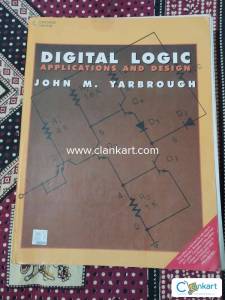
Digital logic applications and design
DIGITAL LOGIC offers the right balance of classical and up-to-date treatment of combinational and sequential logic design for a first digital logic design class. The author provides a thorough explanation of the design process, including completely worked examples beginning with simple examples and going on to problems of increasing complexity. This text contains PLD (Programmable Logic Design) coverage. Chapter 9 develops complete, worked EPROM, PLA, and EPLD design examples. The problems are developed in Chapter 7 as standard designs using SSI and MSI devices so that your students can see the difference between the two approaches. Table Of Contents: PREFACE DIGITAL CONCEPTS AND NUMBER SYSTEMS Introduction / Digital and Analog: Basic Concepts / Some History of Digital Systems / Impact of Digital Technology on Society / Defining the Problem, an Introduction to Algorithms / Digital Systems Overview / Introduction to Number Systems / Positional Number Systems / Number System Conversion / Binary Codes / Arithmetic / Summary / References / Glossary / Questions and Problems BOOLEAN SWITCHING ALGEBRA Introduction / Binary Logic Functions / Switching Algebra / Functionally Complete Operation Sets / Reduction of Switching Equations Using Boolean Algebra / Realization of Switching Functions / Summary / References / Glossary / Questions and Problems PRINCIPLES OF COMBINED LOGIC Introduction / Definition of Combinational Logic Introduction / Definition of Combinational Logic / Canonical Forms / Generation of Switching Equations from Truth Karnaugh Maps / Quine-McClusky Minimization Technique / Map-Entered Variables / Mixed Logic and Combinational Circuits / Multiple Output Functions
GATE- CS & IT
This book has been prepared by a group of faculties who are highly experienced in training GATE candidates and are also subject matter experts. As a result this book would serve as a one-stop solution for any GATE aspirant to crack the examination. the book is divided into three parts covering, (1) General Aptitude, (2) Engineering Mathematics and (3) Computer Science and Information Technology. Coverage is as per the syllabus prescribed for GATE and topics are handled in a comprehensive manner beginning from the basics and progressing in a step-by-step manner supported by ample number of solved and unsolved problems. Extra care has been taken to present the content in a modular and systematic manner to facilitate easy understanding of all topics.
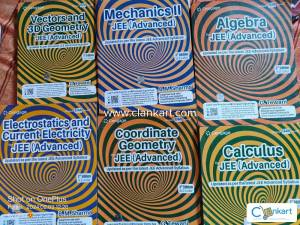
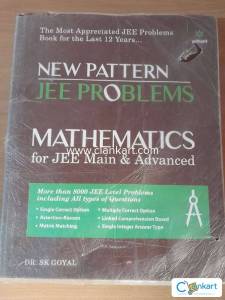
Sk Goyal New Pattern JEE Mathematics for JEE Main & Advanced
Arihants Master Problem Package presents the revised edition of New Pattern JEE Problems Physics for JEE Main & Advanced that has been designed as according to the latest JEE Exam Pattern by providing a good collection Objective Questions. Serving as a complete practice guide, this book is supplemented with good number of questions for practice.This book features: 1. 35 chapters of Mathematics as per the syllabus. 2. More than 8000 MCQs to hone the comprehension and analytical skills. 3. Step by step solution to question for better conceptual clarity and to strategize for a problem.
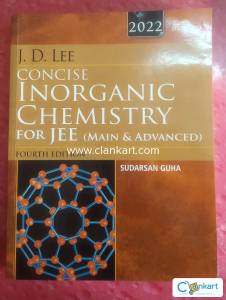
JD LEE Concise Inorganic Chemistry For JEE Mains & Advanced
Please Read Brand New, International Softcover Edition, Printed in black and white pages, minor self wear on the cover or pages, Sale restriction may be printed on the book, but Book name, contents, and author are exactly same as Hardcover Edition. Fast delivery through DHL/FedEx express.
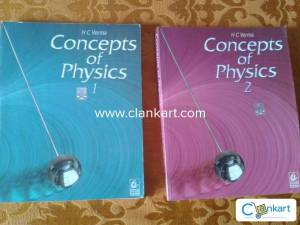
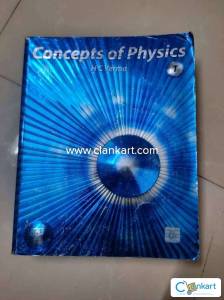
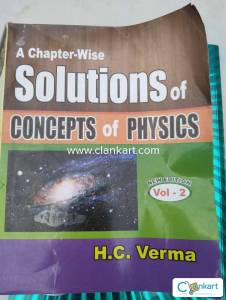
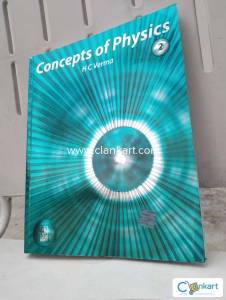
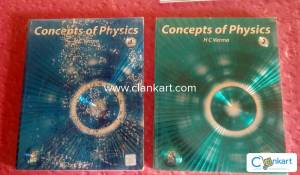
Concept of Physics By HC Verma(Volume 1&2)
Each chapter contains a description of the physical principles related to that chapter. It by mathematical derivations of equations, descriptions of laboratory experiments, historical background, etc. There are "in text" solved examples. These examples explain the equation just derived or the concept just discussed. These will help you in fixing the ideas firmly in your mind. Your teachers may use these in-text examples in the classroom to encourage students to participate in discussions. After the theory section, there is a section on Worked Out Examples. These numerical examples correspond to various thinking levels and often use several concepts introduced in that chapter or even in previous chapters. You should read the statement of a problem and try to solve it yourself. In case of difficulty, look at the solution given in the book. Even if you solve the problem successfully, you should look into the solution to compare it with your method of solution. You might have thought of a better method, but knowing more than one method is always beneficial. Then comes the part which tests your understanding as well as develops it further. Questions for Short Answer generally touch very minute points of your understanding. It is not necessary that you answer these questions in a single sitting. They have great potential to initiate very fruitful discussions. So, freely discuss these questions with your friends and see if they agree with your answer. Answers to these questions are not given for the simple reason that the answers could have cut down the span of such discussions and that would have sharply reduced the utility of these questions. There are two sections on multiple-choice questions, namely OBJECTIVE I and OBJECTIVE II. There are four options following each of these questions. Only one option is correct for OBJECTIVE I questions. Any number of options, zero to four, may be correct for OBJECTIVE II questions. Answers to all these questions are provided. Finally, a set of numerical problems are given for your practice. Answers to these problems are also provided. The problems are generally arranged according to the sequence of the concepts developed in the chapter but they are not grouped under section-headings. I don't want to bias your ideas beforehand by telling you that this problem belongs to that section and hence use that particular equation. You should yourself look into the problem and decide which equations or which methods should be used to solve it. Many of the problems use several concepts developed in different sections of the chapter. Many of them even use the concepts from the previous chapters. Hence, you have to plan out the strategy after understanding the problem. Remember, no problem is difficult. Once you understand the theory, each problem will become easy. So, don't jump to exercise problems before you have gone through the theory, the worked-out problems and the objectives. gradually require more thinking. Once you feel confident in theory, do the exercise problems. The exercise problems are so arranged that they I hope you will enjoy Concepts of Physics. HC Verma
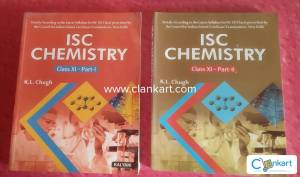
ISC Chemistry Class 11 By KL Chugh(Part 1&2)
Part 1- Strictly deals with the latest syllabus released by the council for the Indian School Certificate Examination.Each chapter provides discussion of all basic principles,definitions,terms and chemical reactions. Part 2-Provides complete solutions of NCERT problems and questions asked in Entrance Examinations.