Buy used Books for JEE online in India
Buy Second Hand Books, Used Books Online In India
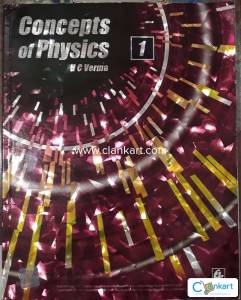
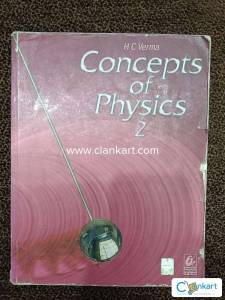
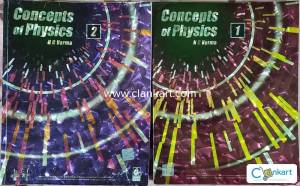
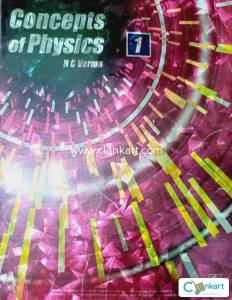
Concept of Physics by H.C Verma Part - 1 Original Book with Hologam
Learn, Grow, Succeed One Page at a Time!Ready to take your JEE preparation to the next level? This book offers proven strategies, expert insights, and practical techniques to help you master concepts and maximize your score. Easy to Follow & Apply Ideal for Students, Self-Learners, and Aspiring Toppers Kickstart your JEE journey with confidence and clarity Buy your book now Start Seeing Results in Days, Not Months! Brand New Condition Never used, no marks, no creases.Perfectly preserved and ready to fuel your success.
Mechanical engineering
For more than 30 years "Mechanical Engineering: Conventional and Objective Type" continues to be a comprehensive text aided by a collection of multiple-choice questions specifically for aspirants of various competitive examinations such as GATE, UPSC, IAS, IES and SSC-JE among others as well as students who are preparing for university examinations. The new edition contains 17 chapters where every important concept of Mechanical Engineering is fairly treated. On the other hand, the questions provided in this book have been selected from various potent resources to provide the students with an idea of how the questions are set and what type of questions to expect on the final day.
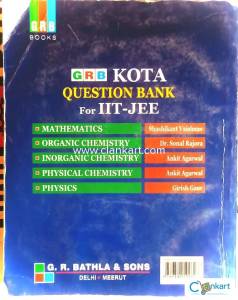
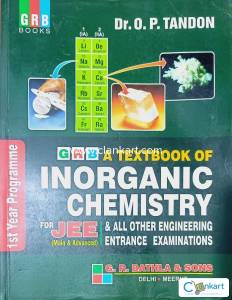
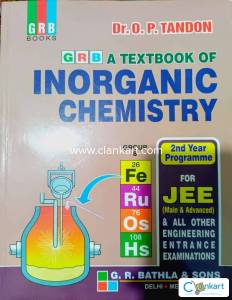
GRB PUB INORGANIC CHEMISTRY Dr.O.PTONDON JEE MAINS & ADVANCE Vol 2
An advanced-level textbook of inorganic chemistry for the graduate (B.Sc) and postgraduate (M.Sc) students of Indian and foreign universities. This book is a part of four volume series, entitled "A Textbook of Inorganic Chemistry – Volume I, II, III, IV". CONTENTS: Chapter 1. Stereochemistry and Bonding in Main Group Compounds: VSEPR theory, dπ -pπ bonds, Bent rule and energetic of hybridization. Chapter 2. Metal-Ligand Equilibria in Solution: Stepwise and overall formation constants and their interactions, Trends in stepwise constants, Factors affecting stability of metal complexes with reference to the nature of metal ion and ligand, Chelate effect and its thermodynamic origin, Determination of binary formation constants by pH-metry and spectrophotometry. Chapter 3. Reaction Mechanism of Transition Metal Complexes – I: Inert and labile complexes, Mechanisms for ligand replacement reactions, Formation of complexes from aquo ions, Ligand displacement reactions in octahedral complexes- acid hydrolysis, Base hydrolysis, Racemization of tris chelate complexes, Electrophilic attack on ligands. Chapter 4. Reaction Mechanism of Transition Metal Complexes – II: Mechanism of ligand displacement reactions in square planar complexes, The trans effect, Theories of trans effect, Mechanism of electron transfer reactions – types; Outer sphere electron transfer mechanism and inner sphere electron transfer mechanism, Electron exchange. Chapter 5. Isopoly and Heteropoly Acids and Salts: Isopoly and Heteropoly acids and salts of Mo and W: structures of isopoly and heteropoly anions. Chapter 6. Crystal Structures: Structures of some binary and ternary compounds such as fluorite, antifluorite, rutile, antirutile, crystobalite, layer lattices- CdI2, BiI3; ReO3, Mn2O3, corundum, pervoskite, Ilmenite and Calcite. Chapter 7. Metal-Ligand Bonding: Limitation of crystal field theory, Molecular orbital theory, octahedral, tetrahedral or square planar complexes, π-bonding and molecular orbital theory. Chapter 8. Electronic Spectra of Transi