Clankart Logo

Buy used Science and Mathematics Textbooks books online in India

Buy Second Hand Books, Used Books Online In India
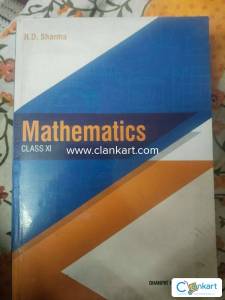
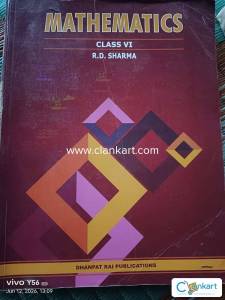
R.D Sharma Mathematics,class vi

R.D Sharma Mathematics,class vi

₹200 ₹375
47% off

Learn Python Quickly, A Programmer-Friendly GuideDESCRIPTIONMost Programmer's learning Python are usually comfortable with some or the other programming language and are not interested in going through the typical learning curve of learning the first programming language. Instead, they are looking for something that can get them off the ground quickly. They are looking for similarities and differences in a feature that they have used in other language(s). This book should help them immediately. It guides you from the fundamentals of using module through the use of advanced object orientation. KEY FEATURESStrengthens the foundations, as detailed explanation of programming language concepts are given in simple manner. Lists down all the important points that you need to know related to various topics in an organized manner.Prepares you for coding related interview and theoretical questions.Provides In depth explanation of complex topics and Questions.Focuses on how to think logically to solve a problem.Follows a systematic approach that will help you to prepare for an interview in short duration of time.Exercises are exceptionally useful to complete the reader's understanding of a topic. WHAT WILL YOU LEARNData types, Control flow instructions, console & File Input/OutputStrings, list & tuples, List comprehensionSets & Dictionaries, Functions & LambdasDictionary ComprehensionModules, classes and objects, InheritanceOperator overloading, Exception handlingIterators & Generators, Decorators, Command-line Parsing WHO THIS BOOK IS FORStudents, Programmers, researchers, and software developers who wish to learn the basics of Python programming language. Table of Contents 1. Introduction to Python2. Python Basics 3. Strings4. Decision Control Instruction5. Repetition Control Instruction6. Console Input/Output7. Lists8. Tuples9. Sets10. Dictionaries11. Comprehensions12. Functions13. Recursion14. Functional Programming15. Modules and Packages16. Namespaces17. Classes and Objects18. Intricacies of Classes and Objects19. Con

1 month ago
Advertisement
Want to see your books here? Have Used Books?
Make some extra cash by selling your old books for actual money in your UPI/Bank account. Go on, it's quick and easy.
Advertisement

Advertisement
Deep Learning (Hard Cover - Brand New)

Deep Learning (Hard Cover - Brand New)

₹1500

An introduction to a broad range of topics in deep learning, covering mathematical and conceptual background, deep learning techniques used in industry, and research perspectives.Deep learning is a form of machine learning that enables computers to learn from experience and understand the world in terms of a hierarchy of concepts. Because the computer gathers knowledge from experience, there is no need for a human computer operator to formally specify all the knowledge that the computer needs. The hierarchy of concepts allows the computer to learn complicated concepts by building them out of simpler ones; a graph of these hierarchies would be many layers deep. This book introduces a broad range of topics in deep learning.The text offers mathematical and conceptual background, covering relevant concepts in linear algebra, probability theory and information theory, numerical computation, and machine learning. It describes deep learning techniques used by practitioners in industry, including deep feedforward networks, regularization, optimization algorithms, convolutional networks, sequence modeling, and practical methodology; and it surveys such applications as natural language processing, speech recognition, computer vision, online recommendation systems, bioinformatics, and videogames. Finally, the book offers research perspectives, covering such theoretical topics as linear factor models, autoencoders, representation learning, structured probabilistic models, Monte Carlo methods, the partition function, approximate inference, and deep generative models.Deep Learning can be used by undergraduate or graduate students planning careers in either industry or research, and by software engineers who want to begin using deep learning in their products or platforms. A website offers supplementary material for both readers and instructors.

2 months ago
Advertisement
Advertisement