Buy used Master of Technology (M.Tech) books online in India
Buy Second Hand Books, Used Books Online In India
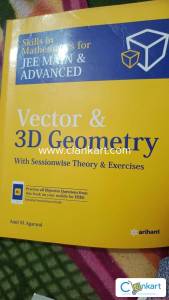
Vector and 3D geometry
1. Skill in Mathematics’ series is prepared for JEE Main and Advanced papers 2. It is a highly recommended textbook to develop a strong grounding in Differential Calculus 3. The book covers the entire syllabus into 8 chapters 4. Each chapter includes a wide range of questions that are asked in the examinations Good foundational grip is required in the Differential Calculus, while you are preparing for JEE Mains & Advanced or any other engineering. Bringing up the series “Skills in Mathematics for JEE Main & Advanced for Differential Calculus” that is carefully revised with the sessionwise theory and exercise; to help candidates to learn & tackle the mathematical problems. The book has 8 Chapters covering the whole syllabus for the JEE Mains and Advanced as prescribed. Each chapter is divided into sessions giving complete clarity to concepts. Apart from sessionwise theory, JEE Type examples and Chapter Exercise contain huge amount of questions that are provided in every chapter under Practice Part. Prepared under great expertise, it is a highly recommended textbook to develop a strong grounding in Algebra to perform best in JEE and various engineering entrances. TOC: Essential Mathematical Tools, Differentiation, Functions, Graphical Transformations, Limits, Continuity and Differentiability, dy/dx As a Rate Measurer & Tangents, Normals, Monotonicity, Maxima and Minima.
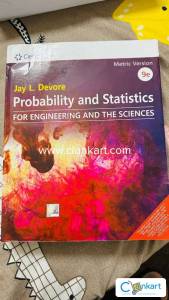
Probability and Statistics for Engeering and The Sciences
Designed as a text for the undergraduate students of all branches of engineering, this compendium gives an opportunity to learn and apply the popular drafting software AutoCAD in designing projects. The textbook is organized in three comprehensive parts. Part I (AutoCAD) deals with the basic commands of AutoCAD, a popular drafting software used by engineers and architects. Part II (Projection Techniques) contains various projection techniques used in engineering for technical drawings. These techniques have been explained with a number of line diagrams to make them simple to the students. Part III (Descriptive Geometry), mainly deals with 3-D objects that require imagination. The accompanying CD contains the animations using creative multimedia and PowerPoint presentations for all chapters. In a nutshell, this textbook will help students maintain their cutting edge in the professional job market. KEY FEATURES : Explains fundamentals of imagination skill in generic and basic forms to crystallize concepts. Includes chapters on aspects of technical drawing and AutoCAD as a tool. Treats problems in the third angle as well as first angle methods of projection in line with the revised code of Indian Standard Code of Practice for General Drawing.
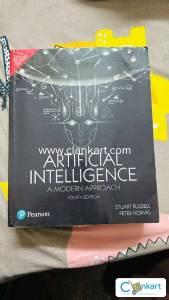
Artificial intelligence: A Modern Approach
For one or two-semester, undergraduate or graduate-level courses in Artificial Intelligence. The long-anticipated revision of this best-selling text offers the most comprehensive, up-to-date introduction to the theory and practice of artificial intelligence. *NEW-Nontechnical learning material-Accompanies each part of the book. *NEW-The Internet as a sample application for intelligent systems-Added in several places including logical agents, planning, and natural language. *NEW-Increased coverage of material - Includes expanded coverage of: default reasoning and truth maintenance systems, including multi-agent/distributed AI and game theory; probabilistic approaches to learning including EM; more detailed descriptions of probabilistic inference algorithms. *NEW-Updated and expanded exercises-75% of the exercises are revised, with 100 new exercises. *NEW-On-line Java software. *Makes it easy for students to do projects on the web using intelligent agents. *A unified, agent-based approach to AI-Organizes the material around the task of building intelligent agents. *Comprehensive, up-to-date coverage-Includes a unified view of the field organized around the rational decision making pa
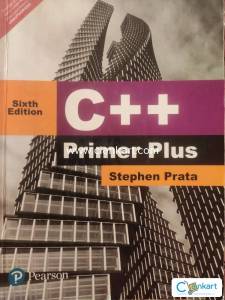
C++ Primer Plus
C++ Primer Plus is a carefully crafted, complete tutorial on one of the most significant and widely used programming languages today. An accessible and easy-to-use self-study guide, this book is appropriate for both serious students of programming as well as developers already proficient in other languages. The sixth edition of C++ Primer Plus has been updated and expanded to cover the latest developments in C++, including a detailed look at the new C++11 standard. Author and educator Stephen Prata has created an introduction to C++ that is instructive, clear, and insightful. Fundamental programming concepts are explained along with details of the C++ language. Many short, practical examples illustrate just one or two concepts at a time, encouraging readers to master new topics by immediately putting them to use. Review questions and programming exercises at the end of each chapter help readers zero in on the most critical information and digest the most difficult concepts. In C++ Primer Plus, youll find depth, breadth, and a variety of teaching techniques and tools to enhance your learning: A new detailed chapter on the changes and additional capabilities introduced in the C++11 standard Complete, integrated discussion of both basic C language and additional C++ features Clear guidance about when and why to use a feature Hands-on learning with concise and simple examples that develop your understanding a concept or two at a time Hundreds of practical sample programs Review questions and programming exercises at the end of each chapter to test your understanding Coverage of generic C++ gives you the greatest possible flexibility Teaches the ISO standard, including discussions of templates, the Standard Template Library, the string class, exceptions, RTTI, and namespaces
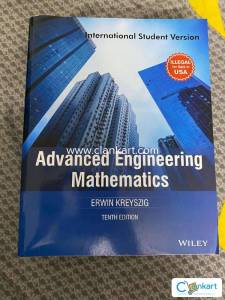
Advanced Engineering Mathematics
The book is a textbook for students of engineering, physics, mathematics, and computer science. The material is arranged in seven independent parts: ordinarydifferential equations, linear algebra, vector calculus, Fourier analysis, partial differential equations, complex analysis, numerical methods, optimization, graphs, probability, and statistics.
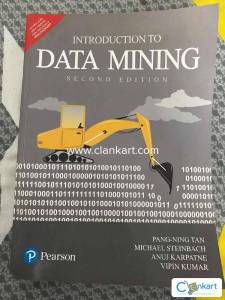
Introduction To Data Mining
In the domain of city planning, smart cities made perceivable differences in easing city life, adding to its quality while keeping its people connected, engaged and informed. This book aims to introduce the idea of ‘Smart cities’ comprehensively by covering the conceptual basis and the principles in practice systematically and sector-wise. Written lucidly, covering both possible new attempts and retrofitting options in turning smart, the book is an all in one handy volume for beginners to city enthusiasts to advanced learners. Features: 1. Contains a concise story of cities and major innovations in city development. 2. Chapters on Mobility, Energy, Governance, Water Supply, Waste Management, Economy, Buildings and Environment as core sectors of smart city transformation. 3. Dedicated chapter on ICT. 4. Chapters on International and Indian case studies cover potential interventions. 5. Review Questions and Project Ideas added to test level of comprehension. Table of Contents: Chapter 1) Story of Cities Chapter 2) Urbanization and Sustainable Cities Chapter 3) Smart Cities: State of the Art Chapter 4) Smart Urban Mobility Chapter 5) Smart Energy Chapter 6) Smart Governance Chapter 7) Smart Water Management Chapter 8) Smart Waste Management Chapter 9) Smart Economy Chapter 10) Smart Buildings Chapter 11) Smart Environment Chapter 12) ICT for Smart Cities Chapter 13) Smart Cities: International Cases Chapter 14) Smart Cities: Indian Cases
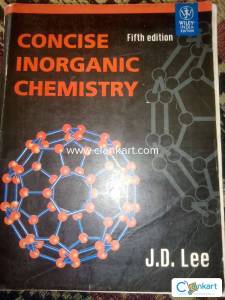
J.D.LEE for 11 th and 12 th class
This textbook is divided into six parts: theoretical concepts and hydrogen, the s-block, the p-block, the d-block, the f-block, and other topics (the nucleus and spectra). It also focuses on the commercial exploitation of inorganic chemicals and the treatment of the inorganic aspects of environmental chemistry has also been extended.· Atomic structure and the Periodic table· Introduction to bonding· The ionic bond· The covalent bond· The metallic bond· General properties of the elements· Coordination compounds· Hydrogen and the hydrides· Group 1 - The alkali metals· The chlor-alkali industry· Group 2 - The alkaline earth elements· The group 13 elements· The group 14 elements· The group 15 elements· Group 16 - the chalcogens· Group 17 - the halogens· Group 18 - the noble gases· An introduction to the transition elements· Group 3 - The scandium group· Group 4 - The titanium group· Group 5 - The vanadium group· Group 6 - The chromium group· Group 7 - The manganese group· Group 8 - The iron group· Group 9 - The cobalt group· Group 10 - The nickel Group· Group 11 - The copper group: Coinage metals· Group 12 - The zinc group· The lanthanide series· The actinides· The atomic nucleus· Spectra
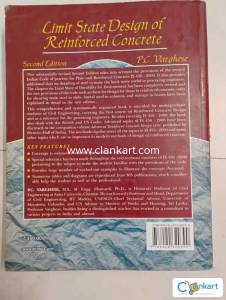
Engineering _Limit state of RCC Varghese
This substantially revised second edition takes into account the provisions of the revised Indian Code of practice for Plain and Reinforced Concrete IS 456 : 2000. It also provides additional data on detailing of steel to make the book more useful to practicing engineers. The chapter on Limit State of Durability for Environment has been completely revised and the new provisions of the code such as those for design for shear in reinforced concrete, rules for shearing main steel in slabs, lateral steel in columns, and stirrups in beams have been explained in detail in the new edition.This comprehensive and systematically organized book is intended for undergraduate students of Civil Engineering, covering the first course on Reinforced Concrete Design and as a reference for the practicing engineers. Besides covering IS 456 : 2000, the book also deals with the British and US Codes. Advanced topics of IS 456 : 2000 have been discussed in the companion volume Advanced Reinforced Concrete Design (also published by Prentice-Hall of India). The two books together cover all the topics in IS 456 : 2000 and many other topics which are so important in modern methods of design of reinforced concrete.Contents:List of Illustrations. List of Tables. Foreword. Preface. Preface to the First Edition. Acknowledgements. Introduction to IS 456 (2000). Introduction to Limit State Design. Methods of Design of Concrete Structures. Partial Safety Factors in Limit State Design. Limit State of Durability of Reinforced Concrete to Environment. Theory of Singly Reinforced Members in Bending (Limit State of Collapse—Flexure). Examples in Design and Analysis of Singly Reinforced Beams. Design of Doubly Reinforced Beams. Limit State of Collapse in Shear (Design for Shear). Design of Flanged Beams. Design of Bending Members for Serviceability Requirements of Deflection and Cracking. Bond, Anchorage, Development Lengths and Splicing. Design of One-way Slabs. Design of Two-way Slabs. Limit State of Collapse in Compression Design of Axially Loaded Sh
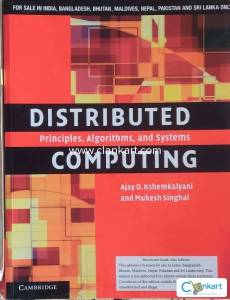
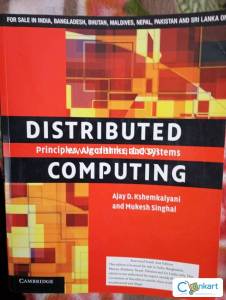
Distributed Computing
This definitive textbook provides a solid introduction to discrete and continuous stochastic processes, tackling a complex field in a way that instils a deep understanding of the relevant mathematical principles, and develops an intuitive grasp of the way these principles can be applied to modelling real-world systems. It includes a careful review of elementary probability and detailed coverage of Poisson, Gaussian and Markov processes with richly varied queuing applications. The theory and applications of inference, hypothesis testing, estimation, random walks, large deviations, martingales and investments are developed. Written by one of the world's leading information theorists, evolving over twenty years of graduate classroom teaching and enriched by over 300 exercises, this is an exceptional resource for anyone looking to develop their understanding of stochastic processes.